
Julie Coffey
UCI Campus Reserves Manager
Cell: 603-521-5576
Email: [email protected]
Julie has worked with the UCI natural reserves for over five years, but recently transitioned into the campus reserves manager role. In her previous roles at UCI, she focused on applied habitat restoration and land management projects such as the wildfire safety and healthy habitats project, DroughtNet, and building up water quality monitoring and bird monitoring projects.
She earned her M.Sc in ecology from California State University, Los Angeles, where she studied the effects of large-scale invasive plant removal on floodplain wildlife communities along the Rio Grande in Texas. Before graduate school, Julie managed water quality sampling and contributed to ecological monitoring projects in the watershed division of the Cambridge Water Department.
Her diverse research experience includes field studies on salt marsh and grassland birds, as well as marine mammal behavior. Julie holds a B.S. in environmental science and conservation biology from the University of Vermont’s Rubenstein School. In addition to her research work, she has served as an environmental educator for various non-profit organizations, nurturing her passion for teaching others about local ecology.
As campus reserves manager, she is eager to collaborate with faculty, staff, students, and the community to develop innovative strategies for restoring habitat and connections with the land in the face of climate change, urbanization, and biological invasions.

Megan Lulow
Executive Director
Office: 3021 Biological Sciences III
Cell: 949-500-8754
Email: [email protected]
University of California, Irvine
Mail: 4120 Natural Sciences 2
Irvine CA 92697-1450
Megan began her work with UC Irvine’s UCI-NATURE (UC Irvine’s Networked Assets to Understand the Environment) program when it was initiated in 2016. The program oversees operations and stewardship for UC Irvine’s field-based assets for research, teaching, and outreach, including the Steele-Burnand Anza-Borrego Desert Research Center within the UC Natural Reserve System. Prior to her work with UCI-NATURE, Megan held multiple positions with the Irvine Ranch Conservancy over a ten-year period, during which the organization tripled in size. She worked with staff and partners to develop programs and integrate science into their resource management strategy to inform best management practices. Upon completing her graduate research, she was Assistant Director for two years at the Sweeney Granite Mountains Desert Research Center, also within the UC Natural Reserve System. Megan has worked extensively on both project implementation and research in the field of restoration ecology in a variety of California ecosystems since 1997. Her research and methodologies look to leverage natural processes to advance the restoration of ecosystems at scales and in locations that optimize ecological impact and cost efficiency. She received her doctorate in ecology from the University of California, Davis, with an emphasis in restoration, plant ecology, and plant-soil relations, and her bachelor’s degree with a double major in biology and environmental studies from the University of California, Santa Cruz. She is broadly interested in ecology and enjoys bringing people together from multiple sectors of society to better understand natural environments and identify solutions to conservation and restoration challenges.

Kailen Andrews Mooney
Faculty Director (UCI Nature)
Phone: (949) 824-7852
Email: mooneyk@jecoffey
University of California, Irvine
3112 Biological Sciences 3
Mail Code: 2525
Irvine, CA 92697
Research Interests
community ecology, evolutionary ecology, plant-insect interactions
URL Lab website: tritrophic.org
Appointments
Postdoctoral Researcher, Cornell University, Dept. Ecology & Evolutionary Biology, Anurag A. Agrawal Lab (www.herbivory.com), 2005-2007
Research Abstract
I use manipulative field experiments and to study the interactions between plants, arthropods and insectivorous birds in both ecological and evolutionary contexts. Traits of plants (e.g. defensive chemistry, morphology) influence whole communities of arthropods from the ‘bottom-up’, while predators influence the same communities from the ‘top-down’. These two influences have traditionally been considered separately. Plant defense theory has been bi-trophic in nature, focusing on the pairwise plant-herbivore interaction without explicitly addressing the community context in which the interaction is embedded. At the same time, community ecology has addressed the top-down effects of predators without considering how plant traits affect food web structure.
The goal of my research is to conceptually unite community and evolutionary ecology. To do this, I ask how heritable plant traits influence interaction networks among herbivores, herbivore mutualists, and predators, and in turn how such networks drive the microevolution of plant defense. Methodologically, I model the results of long-term and large-scale field experiments using a combination of quantitative genetic and multivariate statistical techniques. By incorporating complex dynamics into my experiments, I rigorously test theory while simultaneously collecting detailed natural history observations as the basis for refining and pushing forward those same theories.
Publications: https://www.faculty.uci.edu/profile.cfm?faculty_id=5484
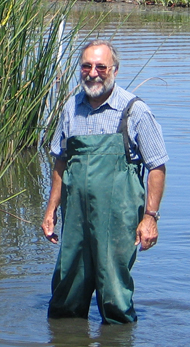
Peter Bowler (Biological Sciences)
Faculty Adviser Emeritus
Professor of Teaching
Faculty Advisor, UCI Arboretum and Herbarium (IRVC)
Director, Interdisciplinary Minor in Global Sustainability
Ph.D., University of California, Irvine, 1974
Cell: 949-701-6114
Email: [email protected]
Department of Ecology and Evolutionary Biology
University of California, Irvine
Irvine, California 92697-2525
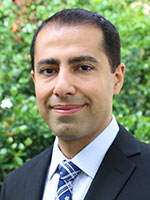
Amir Aghakouchak (Civil and Environmental Engineering)
Faculty Advisor and Professor Civil & Environmental Engineering
Email: [email protected]
Location
City of Irvine, Orange County; 75 km (45 mi.) southeast of Los Angeles, 30 km (20 mi.) west of the Santa Ana Mountains; 2 km (1.25 mi.) upstream from Upper Newport Bay, adjacent to the Irvine campus.