Center for Environmental Biology Internship
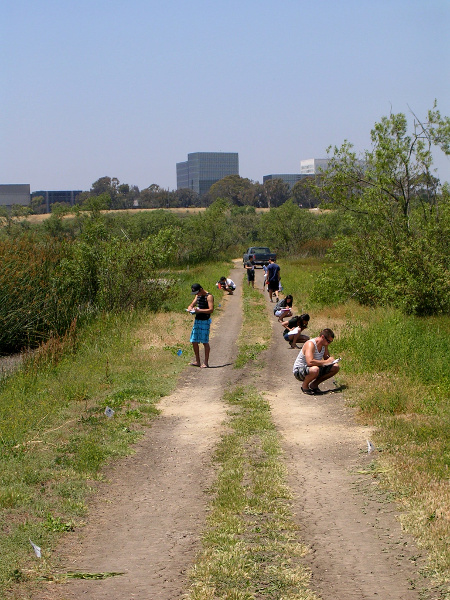
UCI Nature often partners with the Center for Environmental Biology (CEB) internship by offering the interns practical land management experiences. CEB interns assist with water quality monitoring, wildlife monitoring, and restoration activities at the San Joaquin Marsh Reserve— allowing them to gain valuable experience that prepares them for a career in ecology.
If you would like to learn more about this program, visit this website.
Masters in Conservation and Restoration Sciences
The Masters in Conservation and Restoration Sciences (MCRS) program provides hands-on training in the field techniques used in ecological restoration and professional restoration plan development. Class field trips to the San Joaquin Marsh Reserve include activities such as ecological monitoring, restoration techniques and vegetation mapping.
If you would like to learn more about this program, visit this website.
Natural Lands Management Training Program
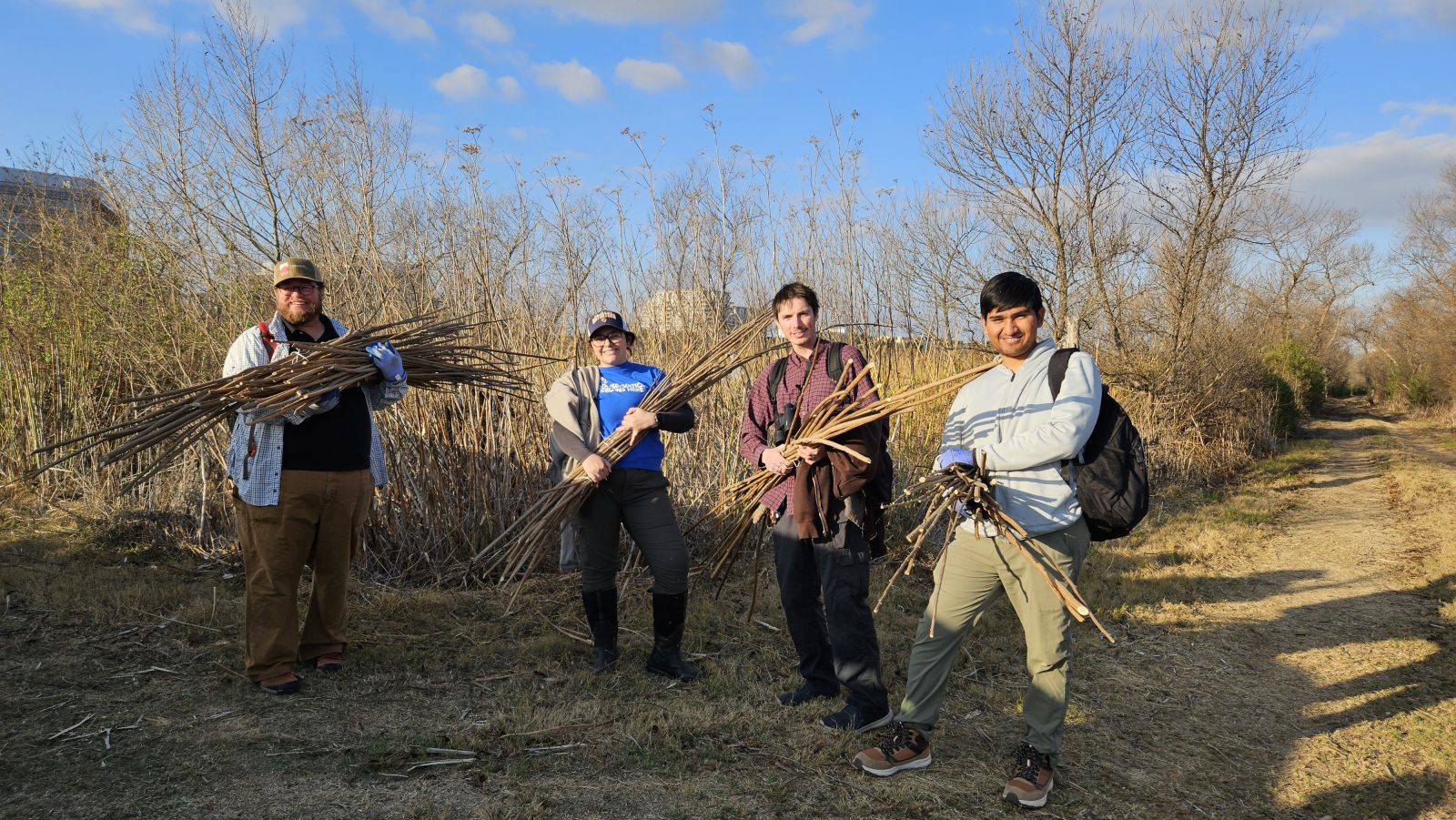
This program was developed in collaboration with the Center for Environmental Biology and Campus as a Living Lab to provide students with an opportunity to gain practical experience in leadership and land management skills. In the program, students will assist in developing and implementing community and science-based land management practices for the UCI Ecological Preserve or the UCI San Joaquin Marsh. After learning about the history, ecology, and management of UCI’s natural lands, students develop an independent project designed to address a conservation challenge while involving the local community. Student projects from this program include:
1. Wildlife Integration Network
2. Monitoring Southwestern Pond Turtle populations at the San Joaquin Marsh
The southwestern pond turtle (Actinemys pallida) is the only native freshwater turtle on the West Coast, with the southern population now recognized as a distinct species of what was once broadly the western pond turtle. Due to habitat loss and other threats, the state of California recognizes the turtle as a species of special concern, and it is currently under consideration for listing at the federal level. Here in Orange County, the largest population of southwestern pond turtles is in the UCI San Joaquin Marsh, yet the population has not been censused since a thesis project by then master’s student Barry Nerhus in 2012. This student project aims to build turtle monitoring traps to catch and count southwestern pond turtles at the UCI San Joaquin Marsh, and lead a turtle walk for members of the public to learn about and observe these unique reptiles!


3. Baseline water quality monitoring at the San Joaquin Marsh
Classes
A number of classes utilize the San Joaquin Marsh as part of their instruction. Courses range from the biological and earth system sciences to film studies and dance. Students also utilize the marsh for independent studies, which are supervised by faculty advisers and may be facilitated by reserve managers. Examples of classes at the marsh are listed below.
Field Methods in Ecology (BIOSCI. E166)
Conducting group and independent studies in Southern California ecosystems, this course covers the fundamentals of experimental design, statistical analysis, communicating scientific findings (orally, visually, in writing), and other skills necessary for the scientific investigation of biological processes in the field.
Field Freshwater Ecology (BIOSCI. E179L)
Analytical techniques for common water-quality variables of lakes, streams, rivers. Benthic fauna, vertebrates and invertebrates, algae, and aquatic plants. Emphasis on field methods with and experimental approach; laboratory exercises. Field trips to marshes, vernal pools, rivers, and streams.
If you are interested in bringing a class out to the San Joaquin Marsh Reserve, please plan your visit to our reserve by making your reservation through RAMS.